

The Art of Dying a Slow Death Well: Long-Suffering in Pastoral Ministry
June 24, 2026


June 24, 2026
Abstract: Kevin McKay points pastors to the reality that suffering in pastoral ministry is often quiet and slow, taking place in small increments rather than in one dramatic act. A pastor’s role and responsibilities make him particularly vulnerable to being underappreciated or even opposed. After McKay identifies the kinds of trials pastors are likely to face, he then offers suggestions for persevering faithfully amid what he refers to as a “slow death.” Ultimately, pastoral suffering is for God’s glory and the eternal good of the pastor and his people.
Editor’s Note: This article is taken from Church Matters, the 9Marks journal for pastors, in the issue titled “The Pastor and Suffering.”
Following Jesus means suffering, and this is especially the case if you’re a pastor. Satan wages war against Christ’s church, unbelievers slander and persecute the godly, and the godly sin against each other. And the pastor? Well, he is in unique proximity and leading amid all this action. Suffering is part of the job. But pastoral ministry rarely ends in one dramatic act of suffering. Instead, we are faced with the uncomfortable question: are we ready for the quiet, often unseen, and slow death that comes from shepherding the sheep for whom Christ died?
In my experience, the temptation to bail out of ministry hasn’t come from one major trial that seemed impossible to overcome. Instead, it’s been the feeling of death by a thousand cuts that threatens my joy in this work. Are you like me in this, brother pastor? Does the almost imperceptible, unrelenting, and incremental suffering make you wonder, Is this worth it? Wouldn’t a simple nine-to-five job be better?
Let me share just a few examples of the kinds of trials that require long-suffering on the part of shepherds.
Sheep can take for granted a shepherd’s patience and grace. It’s the pastor’s job to bear with their faults and sins, even when they sin against him. The pastor knows he must love and forgive, but that responsibility isn’t always acknowledged going the other way. If the shepherd has weaknesses or sins against the sheep, he doesn’t always receive the same grace or forgiveness. Instead, the sheep run away.
The shepherd gives his life for the good of the sheep, but the sheep don’t seem to care. We pour ourselves out all week meeting with people, praying for them, and crafting the best sermon we can for their good. Our families may even have to regularly make sacrifices so that we can serve the church. As a shepherd, you’re always on call. Yet many sheep seem to think that attending church once or twice a month is sufficient. The church simply falls way down on the priority list.
Sometimes, the closer the sheep are to the shepherd, the more likely the shepherd is to get bitten. That’s how sin and brokenness work; the people who are given the most care and attention often have the strongest complaints. Pastors are pulled away from the study, and from other sheep, to give many hours to the weaker sheep, the ones who feel like you’re not doing enough.
Often, sheep don’t let the shepherds care for them. A pastoral meeting can go really well, and you’re encouraged by the initial response. But sheep end up doing what they want to do. In fact, they often only show up to get advice after they’ve reached their own conclusion. You would love to guide them with Scripture, but they’re only coming to you as a formality. They might not admit it or realize it, but many sheep are basically their own shepherd. It leaves you feeling used or useless, and it breaks your heart for them.
Sheep often find their own shepherd somewhere else. It’s not really God’s Word they’re wanting to hear. No, they’re looking for confirmation regarding their own decisions or affirmation regarding their own concerns. So rather than listening to you, their pastor, who knows them, sees them, and will give an account to God for them, they turn to the preacher or podcaster online, or someone else with even less credibility, and they turn against you in the process. It grieves us not because our (relative) authority is threatened, but because pastoral care is inherently relational, and we’re the ones who will be held accountable for their souls (Heb. 13:17).
Any pastor could easily come up with additional scenarios because there’s one consistent pain point: you’re committed to the good of the sheep, but they’re often not committed to you. You’ll deal with conflict and stay put. They’ll leave. Of course, that doesn’t mean we never give them reason to leave. We sin against our people in a variety of ways, and some of the cuts we receive come as a consequence of our own mistakes. But by and large, even the most faithful shepherds will bear some scars given to them by those they serve.
If the pastor is called to lay down his life for the sheep, then scenarios like the ones above cannot be completely avoided. No matter how healthy the church is, all sheep carry the weakness of their own sin; they’re vulnerable to the dangers of this world; and they’re prone both to bite and to wander. How, then, can a pastor die a slow death well?
First, we need to remember whom we’re ultimately serving. If we make our work all about the sheep or all about ourselves, then we’re likely going to be miserable in suffering. But we must remember: we’re under-shepherds of Christ. They’re his sheep. He died for them to bring glory to himself. So he must increase and we must decrease (John 3:30). I have found much peace by simply telling myself, “It’s not about me.”
Second, it’s good to die. It’s part of following Christ. Jesus said, “If anyone wants to follow after me, let him deny himself, take up his cross and follow me” (Matt. 16:24). In dying for the good of others, God is making me more like his Son. And it’s not in vain, for Jesus goes on to say that those who lose their life for him will ultimately “find it,” and his Father will “reward” them on the last day (vv. 25, 27).
Paul’s letters reveal a pastor who understood Jesus’s words and applied them to the struggles of gospel ministry. Paul likened his ministry to a woman in labor until Christ was formed in the church (Gal. 4:19). And he said what every pastor dying a slow death well can say: “For we who live are always being given over to death for Jesus’s sake, so that Jesus’s life may also be displayed in our mortal flesh. So then, death is at work in us, but life in you” (2 Cor. 4:11–12). Likewise, at the end of his ministry, he could say,
For I am already being poured out as a drink offering, and the time for my departure is close. I have fought the good fight, I have finished the race, I have kept the faith. There is reserved for me the crown of righteousness, which the Lord, the righteous Judge, will give me on that day, and not only to me, but to all those who have loved his appearing. (2 Tim. 4:6–8)
Brother, if you feel like your suffering goes unseen by many of your sheep, rest assured that it doesn’t go unnoticed by the Chief Shepherd. If we can die to ourselves for the sake of Christ, even if it’s by a thousand cuts, then we can be sure our life of service was worth it.
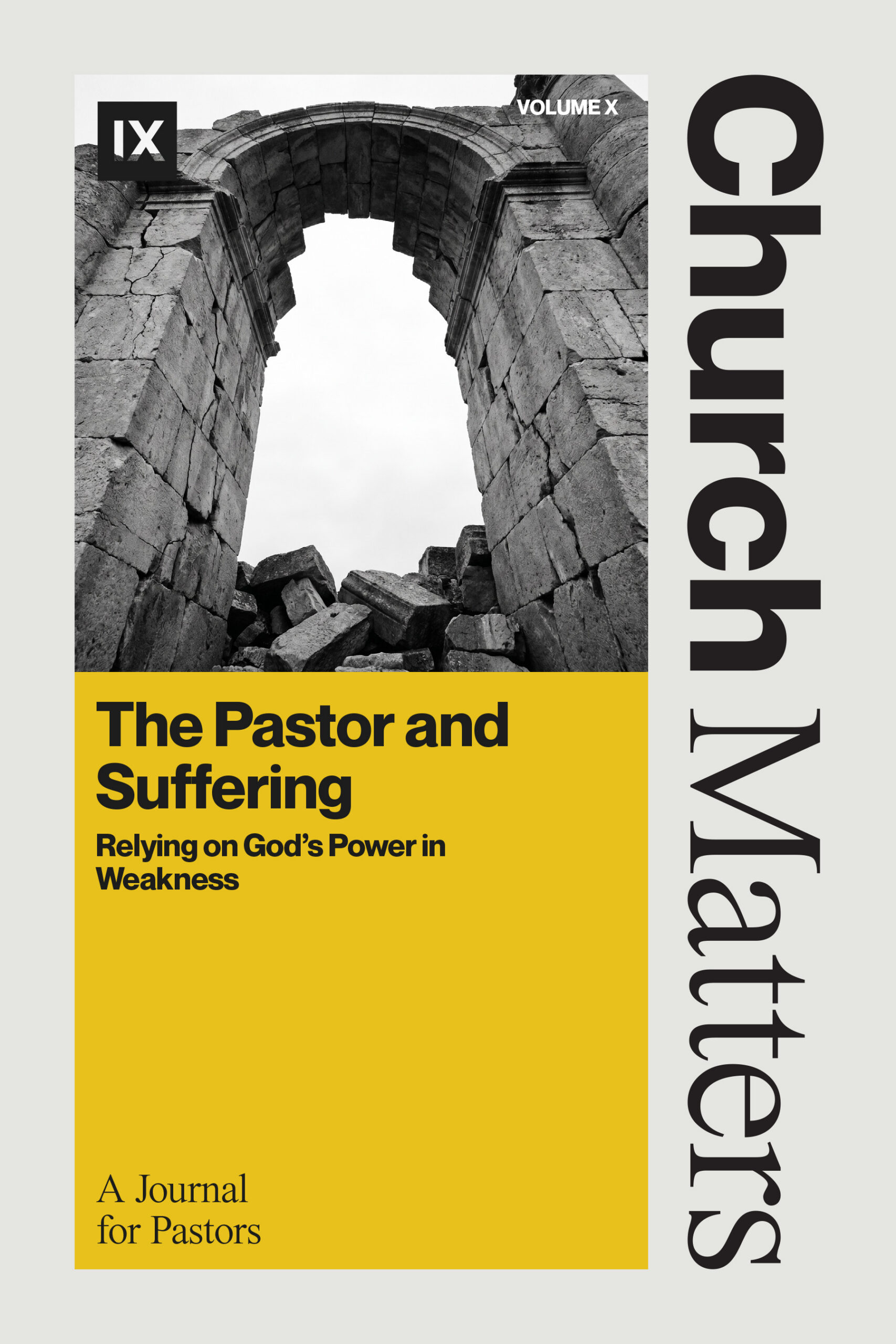
No pastor is immune from suffering. Whether it's cancer, depression, grief, or persecution, pastors face the same kinds of trials as their people. Not to mention the difficulties that arise from the ministry itself. But how can pastors strengthen God's people amid their own suffering?
Go to Journal →