

The Elements of Corporate Worship and Christian Discipleship
August 19, 2026

August 19, 2026
Abstract: Joshua George reminds us that Christians are discipled by the elements of corporate worship and that we also disciple others through these elements. George highlights the elements of singing, corporate prayer, corporate Scripture reading, preaching God’s Word, baptism and the Lord’s Supper, and fellowship. These elements are used to grow us in godliness, but they are not merely individualistic, for we have the responsibility and privilege to build up our fellow members as we gather each week to worship God.
When we hear about being “discipled,” we often picture a one-on-one relationship or a small group setting, and those are important ways in which we grow as Christians. But have you thought about how discipleship happens through the gathered church?
Scripture teaches us how to use our time together—how to “do church”—and each element of our services is designed by God to disciple you and to give you opportunities to disciple others in your church family. Consider, then, how the following elements of corporate worship shape our discipleship.
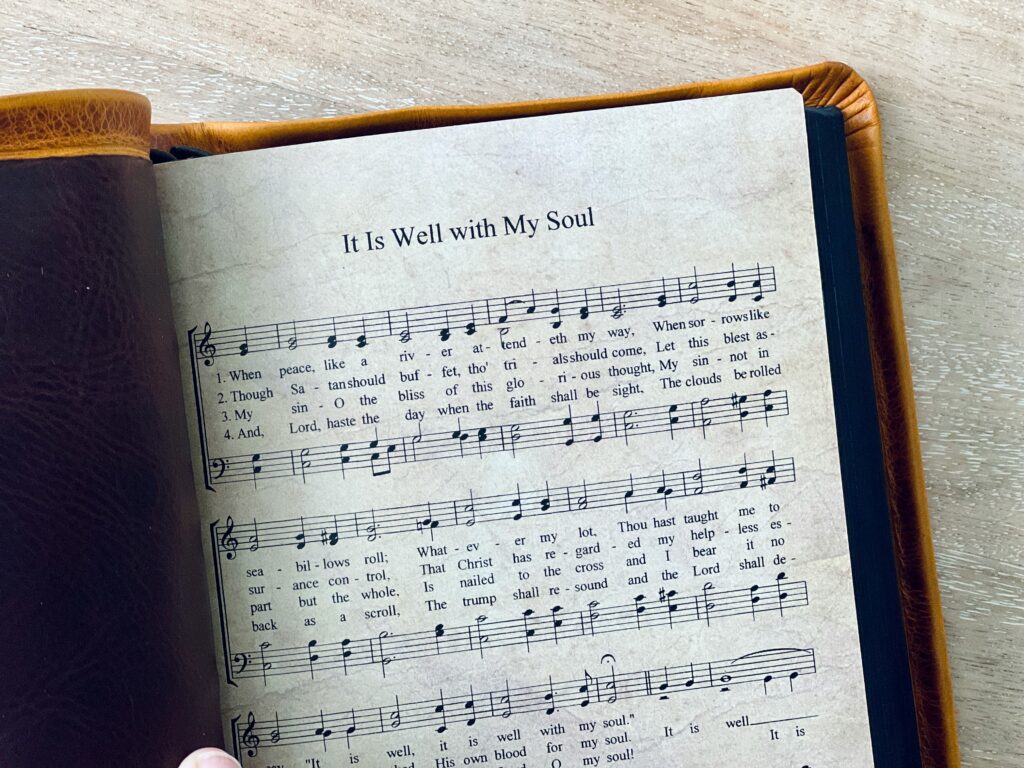
From the earliest church gatherings, Christians have sung together. In fact, congregational singing is a distinctive feature of biblical Christianity. As Paul writes to the church at Colossae, “Let the word of Christ dwell in you richly, teaching and admonishing one another in all wisdom, singing psalms and hymns and spiritual songs, with thankfulness in your hearts to God” (Col. 3:16).
Christians sing with “thankfulness” to God, and this is a primary way we express love for, adoration of, and praise to Christ, our Savior and Lord. But according to Paul, singing also builds others up. That is, we sing for one another’s discipleship. And this singing shouldn’t be a performance from the stage to the congregation. Church singing is the church singing.
Some songs are addressed to God while others are addressed to one another, and many songs move in both directions. Since teaching and discipling others is one of the purposes of singing, we should sing heartily, as to the Lord. You may feel tired, weak, or self-conscious about your voice, but be willing to put others first by singing boldly with them and to them. They need it, just like you do.
This doesn’t mean we should only sing joyful songs when we gather. Our singing should reflect both the joys and the sorrows of the Christian life, as God ordains both (Phil. 1:29). In this way, the weak and suffering are helped to sing and are ministered to in their pain. We may not remember powerful sermons from ten years ago, but we often remember powerful, gospel-saturated songs for decades.
We also pray together in church. Repeatedly in Acts, we see the gathered church praying (2:42; 3:1; 6:4), as this was one of the Spirit’s chief means of driving the church forward. The same thing is true today.
Usually in our services one person leads the congregation in prayer, which means each week we’re being taught how to pray. We can learn from good prayers and good prayers. So next time you’re asked to pray in church, make every effort to pray in a way that accords with God’s Word, because you’re discipling others to do the same.
Reading Scripture together is another way we’re discipled in the gathering. Just as Paul tells Timothy to “devote yourself to the public reading of Scripture” (1 Tim. 4:13), so we should hear Scripture read and read it to others in our services. The importance of hearing Scripture is underlined by Paul’s words later in 2 Timothy 3:16–17, where he writes, “All Scripture is breathed out by God and profitable for teaching, for reproof, for correction, and for training in righteousness, that the man of God may be complete, equipped for every good work.”
God’s Word is powerful and life-giving, and it provides us with spiritual nourishment. As it’s read publicly, it exposes people’s souls and speaks into their circumstances. Similar to how we counsel individuals with Scripture in one-on-one settings, so also we use the Scriptures to counsel the church corporately.
One of the primary ways we are discipled is by hearing God’s Word preached. The Scriptures teach and shape the church into greater maturity in Christlikeness (Col. 1:28). It’s important, then, that we learn to listen well. At a practical level, some are helped by taking notes, and most people find it helpful to keep their Bibles open so that they can follow what’s being said and stay focused.
We can also benefit from the preached Word by talking about the sermon after the service or during the week with fellow members and with our own families. Ask others what they learned or what stood out to them. This is one way we encourage one another to listen well.
When we baptize people, we affirm the credibility of their profession of faith and welcome them into the church. And when we take the Lord’s Supper together, we reaffirm our profession of faith as well as the profession of others as we identify publicly as Christ’s body. This meal is not just a private moment between you and God; it’s the whole church affirming these truths together.
Can you see how the ordinances are public, visible proclamations of the gospel that teach, shape, and disciple the whole congregation? Through them we’re reminded of the gospel; of our identity as God’s people; of our commitment to one another; of what repentance, faith, and confession look like; and of the importance of personal and corporate holiness.
Corporate discipleship doesn’t end at the benediction or closing prayer. If you’re able, don’t rush off after the service. Stick around and talk with others with the intention of encouraging them (and being encouraged by them). At a family meal, you don’t eat and then leave as quickly as possible. The food nourishes you, but so do the people around you. Church is family time!
Discipleship in the gathered church isn’t just the pastor’s job but the job of every member. Ideally, everyone is being discipled and discipling others. Therefore, we want to make the most of every opportunity with this God-given privilege and responsibility.