

Youth Ministry Deconstructed

September 25, 2026

September 25, 2026
Abstract: Kyle Hoffsmith commends David Odom’s Youth Ministry Deconstructed, a book that helps churches evaluate and “deconstruct” their current youth ministry aims and practices in order to reconstruct their youth ministry in a way that is biblical, sustainable, and contextual. Hoffsmith highlights four main strengths of the book: it integrates youth ministry into the church as a whole; it encourages youth ministries to partner with parents; it encourages churches to evaluate their current practices; and it encourages churches to focus on spiritual growth rather than numbers.
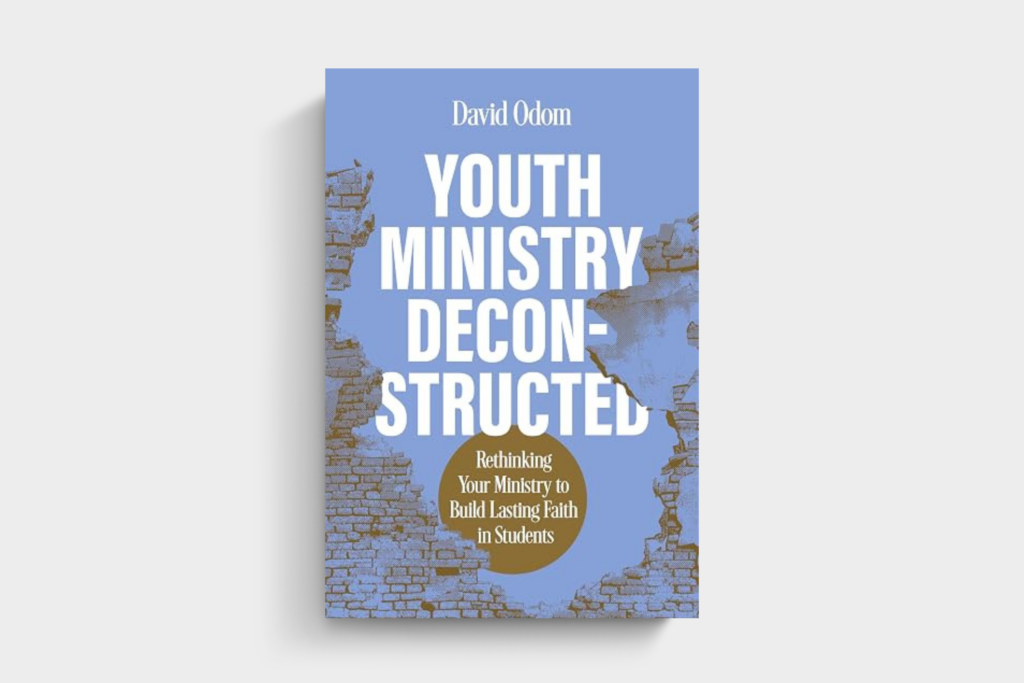
David Odom, Youth Ministry Deconstructed: Rethinking Your Ministry to Build Lasting Faith in Students. B&H Academic, 2026. 288 pages.
There is much discussion today about what youth ministry should look like in the church. Some argue that teenagers should be fully integrated into the life of the church and treated as adults, which means that youth ministry (as it is typically understood) largely disappears as children get older. On the other hand, some churches believe that students should have their own age-segmented ministry throughout their high school years, where most of what is taught and planned is specifically for them. And there are plenty of positions in between.
This isn’t merely a disagreement over church polity, as all churches must decide how best to minister to the teenagers among them. These young people need to be evangelized, taught, and shepherded in a way that helps them grow into mature followers of Christ “in the midst of a crooked and twisted generation” (Phil. 2:15).
I would agree with professor, author, and youth ministry veteran David Odom that youth ministry needs a “deconstruction.” Odom uses this term as a play on words, as many today speak of “deconstructing” their faith. He uses it to exhort churches to tear down, or deconstruct, the structures and strategies they have used for decades to minister to teenagers. This deconstruction phase comprises the book’s first six chapters, as Odom offers metrics for evaluating your youth ministry in various areas, including spiritual growth, discipleship, and discipleship environments. Then chapters 7–10 focus on building back up, or reconstructing, your youth ministry in a way that is biblical, sustainable, and contextual.
Church leaders will undoubtedly find places where they differ with Odom’s approach or his specific applications in certain areas, yet the issues and questions he raises are worthy of reflection. Rather than summarize each chapter, I want to commend Youth Ministry Deconstructed to church leaders by highlighting four main strengths of the book.
There has been concern for a while now about how youth ministry has created silos in the church. The most encouraging thing about this book is that Odom wants to integrate youth ministry within the church as a whole. So, for instance, when it comes to a question like, Should teenagers skip the corporate gathering to go to a youth worship service? Odom says, “Don’t allow a youth-only worship gathering to become a substitute for intergenerational corporate worship. Teenagers in the church benefit both young people and the congregation” (126). And when it comes to the question, Why does youth ministry exist? he points to an example of a student ministry that uses the following discipleship strategy: “The process for the student ministry is the same as the church as a whole” (112). This doesn’t mean that there can’t be spaces for students to learn in age-appropriate settings, but it does mean that churches should prioritize having youth in the main gathering.
This book emphasizes that youth ministries should partner with parents rather than simply connect with them. Furthermore, Odom says, “We can’t talk about student spiritual growth without discussing the spiritual health of parents” (56). God gave students their parents before he gave them youth pastors. This is why a youth pastor (or any other pastor) should minister to students with their parents in mind instead of focusing solely on the youth. This insight also suggests that one way the church can minister to teenagers is by discipling their parents to be mature followers of Jesus.
To help churches decide how to rebuild youth ministries that fit their context, Odom offers introspective questions at the end of each of the ten chapters. In total, there are 142 questions for church leaders to discuss! The book is not, then, simply about an information transfer; it prompts church leaders to think through how best to apply these principles to their students. Youth ministry will look different for every church due to differing structures and church polities. Still, all churches will benefit from evaluating whether they are faithfully and wisely applying Scripture in the way they minister to teenagers.
Finally, Youth Ministry Deconstructed helps church leaders focus not on how many teenagers are involved but on whether they know Christ and are growing in him. Odom notes, “Deconstructing youth ministry encourages you to move beyond measuring how many people are involved to discover to what extent people are growing toward Christlike maturity” (135). Pastors know that it’s harder to measure spiritual growth than it is to simply count attendance. But true spiritual fruit grows in those who are abiding in Christ, not merely in those who are in close proximity to a church building.
Even if your church is not overflowing with teenagers, this book is a helpful resource to read so that you’re ready to minister to families that the Lord brings in the future.
So does youth ministry need a deconstruction? Yes. But don’t forget to build it back up. Teenagers are not just the church of the future—they are valuable to Jesus today.