Helping pastors build healthy churches.

Who We Are

At 9Marks, we help pastors, future pastors, and church members build healthy churches. To this end, we create resources like books, podcasts, a quarterly journal, web courses, and more. We also host training events around the world. Our focus in everything is on nine marks of a healthy church—expositional preaching, gospel doctrine, conversion and evangelism, church membership, church discipline, discipleship and growth, church leadership, prayer, and missions. Why these nine? Because the Bible requires them, and, sadly, too many evangelical churches have neglected or assumed them.

The Nine Marks

Expositional Preaching


What is it?

Expositional preaching makes the main point of a passage of Scripture the main point of the sermon and then applies that point to the life of the congregation.

Where is it in the Bible?

  • According to Scripture, God accomplishes his purposes through speaking to his people (see Gen. 1:3, Isa. 55:10-11, Acts 12:24). This means that for sermons to be filled with God’s power, preachers must preach God’s Word.
  • The Bible has many examples of expositional preaching and teaching. Think of the Levitical priests who taught the Law (Deut. 33:10), Ezra and the Levites who read from the Law and gave the sense of it (Neh. 8:8), and Peter and the apostles who expounded Scripture and urged their hearers to respond with repentance and faith (Acts 2:14-41, 13:16-47).
  • On the other hand, God condemns those who “speak of their own imagination, not from the mouth of the Lord” (Jer. 23:16, 18, 21-22).

Why is it important?

Expositional preaching is important because God’s Word is what convicts, gives new life, builds up, and sanctifies God’s people (Heb. 4:12; 1 Pet. 1:23; 1 Thess. 2:13; Jn. 17:17). What God’s people need is not a preacher’s wisdom, but God’s wisdom.

Gospel Doctrine

What is it?

Gospel doctrine addresses who God is, who we are as sinners, and what God has done to save those who repent of their sin and trust in him.

Where is it in the Bible?

  • The Bible teaches that God created the world, and that he is holy, faithful, loving, and sovereign (Gen. 1:1; Lev. 21:8; Ex. 34:6-7; John 5:20; 1 John 4:10, 19; Isa. 45:7-9; Eph. 1:11).
  • The Bible also teaches that man was made in God’s image in order to obey God’s commands and enjoy perfect fellowship forever (Gen. 1:26-27, 2:17; Psalm 19:7-9; Rev. 2:7).
  • Rather than obey God, however, man sinned, death entered the world, and all came under condemnation before God (Rom. 5:12-14).
  • Yet the Bible makes clear that God loved a sinful people and sent his only Son to live, die, and rise in order to forgive any who repent of their sin and trust in him (Gal. 2:16; Rom. 5:1-2; 2 Cor. 5:21).
  • The entire Bible and all its doctrine points to the person and work of Jesus Christ (Luke 24:44-47; John 5:39-40).

Why is it important?

Gospel doctrine is important because there is no other way for man to be forgiven of his sins and receive eternal life but through Jesus Christ (Acts 4:12).

Conversion and Evangelism

What is it?

Conversion is the radical change of heart and life which God brings about in his people by his Spirit. Evangelism is one person telling others about how to be reconciled to God through faith in Christ. Evangelism is often the means by which God converts people.

Where is it in the Bible?

  • From the Law, the prophets, and Jesus and the Apostles’ teaching we learn that man is in desperate need of a new heart (Deut. 31:14-23, Eze. 3:7; Mark 7:20-23; Rom 3:23; Eph 2:10).
  • In the Old Testament, God promised to change his people’s hearts himself by sending a Messiah who would redeem them from their failures and sins (Isa. 53:4-5; Jer. 31:33-34).
  • Through the work of Jesus, the promised Messiah, and God’s Holy Spirit, everyone who God calls to himself is converted—that is, they repent, believe, and are saved (John 3:5-13, 6:37-40). This conversion cannot be accomplished in man’s heart without God performing the work (John 6:44).
  • God commands that everyone who has been converted to go and share the good news of Jesus with the world in order that they too may be saved (Matt. 28:19-20; Rom 10:14-15; 2 Cor 5:19). This is the work of evangelism, and evangelism is God’s ordinary means to bring about conversion.

Why does it matter?

Conversion is important because we were created to find ultimate joy in dwelling with God, and we must be converted to know and be with him. Evangelism is important because God calls and uses us to share the good news with others so that they might be saved.

Church Membership

What is it?

According to the Bible, church membership is a commitment every Christian should make to attend, love, serve, and submit to a local church.

Where is it in the Bible?

  • Throughout the Old Testament, God made a clear distinction between his people and the world. The New Testament Apostles then insist on this same distinction (Lev. 13:46, Num. 5:3, Deut. 7:3; 2 Cor. 6:14-7:1).
  • Jesus taught that entering the kingdom of God involves being bound to the church “on earth,” which is the local church (Matt. 16:16-19; 18:17-19).
  • The first church began at Pentecost when people were baptized and “added to their number” (Acts 2:41). After baptism, participation in the Lord’s Supper then indicates who belongs to the body of Christ (1 Cor. 10:17).
  • Most of the epistles are then written to known quantities of people, such as “to the church of God that is in Corinth” and “to the churches of Galatia.” These are not random crowds but identified and marked off groups of individuals who would identify as those churches.
  • The New Testament explicitly refers to some people being“inside” the church and others being “outside” church. It also speaks of “removing” people from the church and a punishment by the majority (1 Cor. 5:2, 12-13; 2 Cor. 2:6).
  • The New Testament contains dozens of “one another” commands which fill out our understanding of what church membership should practically look like.

Why is it important?

Biblical church membership is important because it is through the church that God testifies of himself and displays his glory to the world. In the church’s membership, then, non-Christians should see in the lives of God’s changed people that God is holy and gracious and that his gospel is powerful to save and transform sinners.

Church Discipline

What is it?

  • Church discipline is the work of correcting sin in the life of the body.
  • This can be done privately and informally. On rare occasion, it can also include a final step of excluding a professing Christian from membership in the church and participation in the Lord’s Supper because of serious unrepentant sin (see Matt. 18:15-20, 1 Cor. 5:1-13).

Where is it in the Bible?

  • The New Testament commands corrective discipline in passages like Matthew 18:15-17, 1 Corinthians 5:1-13, 2 Corinthians 2:6, and 2 Thessalonians 3:6-15.
  • The New Testament also details formative discipline (our efforts to grow in holiness together) in countless passages which speak of pursuing holiness and building one another up in the faith, such as Ephesians 4:11-32 and Philippians 2:1-18.

Why is it important?

Discipline is like the stake that helps a tree grow upright, the extra set of wheels on the bicycle, or the musician’s endless hours of practice. Without discipline, we won’t grow as God wants us to. With discipline, we will, by God’s grace, bear peaceful fruit of righteousness (Heb. 12:5-11).

Discipleship

What is it?

The Christian life is one of growing in godliness (2 Pet. 1:7-10). Growth comes not only by instruction, but also by imitation (1 Cor. 4:16; 11:1). Therefore, churches should exhort their members to grow in holiness and help others do the same.

Where is it in the Bible?

  • Peter exhorted his readers to grow in grace and in the knowledge of our Lord and Savior Jesus Christ (2 Pet. 3:18)
  • Paul exhorted the Ephesians to grow by speaking the truth in love to one another (Eph. 4:15).
  • Many passages in Scripture instruct us to imitate godly leaders (1 Cor. 11:1; Phil. 4:9; Heb. 13:7).

The point is that, according to Scripture, all Christians should grow in Christ, imitate other godly Christians, and encourage others in their growth in Christlikeness.

Why is it important?

Promoting biblical discipleship and growth is important because none of us are finished products. Until we die, all Christians will struggle against sin, and we need help in this fight. Moreover, churches that foster cultures of Christian discipleship strengthen their witness by offering the world a picture of what the gospel looks like in action.

Church Leadership

What is it?

There are two church offices according to Scripture: elders and deacons. Elders are to be godly, qualified men who serve as teachers and shepherds of the church. Deacons, on the other hand, are servants of the church, focusing on practical needs of members and the unity of the whole body.

Where is it in the Bible?

  • Paul lays out the qualifications for elders in 1 Timothy 3:1-7 and Titus 1:5-9.
  • God gifts churches with elders to
    • feed God’s sheep God’s word (Jn. 21:15-17),
    • guide the sheep (1 Tim. 4:16; 1 Pet. 5:3, Heb. 13:7),
    • and protect the sheep from attackers (Acts 20:27-29; 2 Tim. 4:3-4; Tit. 1:9),
    • while protecting both themselves and the church through the wisdom of their plurality (Prov. 11:14; 24:6).
  • When the Epistles mention elders, they present them as a group or a plurality (Acts 14:23, Acts 20:17, 1 Tim. 4:14, 5:17; James 5:14).
  • The qualifications for deacons are found in 1 Timothy 3:8-13.
  • While “the seven” are not named deacons in Acts 6:1-7, these seven individuals demonstrate the basic work of a deacon: (i) meeting tangible needs, (ii) bringing unity to the church, (iii) and supporting the teaching ministry of the elders.

Why is it important?

Biblical eldership is important because through it God blesses the church with instruction, protection, and unity.

Prayer

What is it?

Many wrongly think of prayer as being a kind of mystical energy or religious ritual. But prayer is simply talking to God. It can include praising God, confessing sin, asking for needs, and even lamenting the brokenness of the world. In the Bible, individual Christians and churches are commanded to pray because God really listens and responds to the prayers of his people.

Where is it in the Bible?

  • Jesus taught his disciples to pray directly to God as their Father, to praise him for who he is, and ask him to provide for all our needs (Matt. 6:6-9).
  • He also said believers should ask boldly because God knows what we need and has committed himself to providing for us (Matt. 6:25-34).
  • James identified the reason for believers not having what we need is because we do not ask (James 4:2-3).
  • The early church regularly gathered to pray as they faced many challenges in advancing the gospel among the lost (Acts 1:14, 4:23-31, 12:5).

Why is it important?

Prayer is so fundamental to the Bible that the Bible cannot be understood without it. This is because what God says demands a response from us. Proper responses to God’s revelation include praising, asking, confessing, and lamenting to God in prayer.

Missions

What is it?

Missions is church planting across significant barriers. To fill that out just a bit, missions involves churches sending qualified workers across linguistic, geographic, or cultural barriers to start or strengthen churches, especially in places where Christ has not been named.

Where is it in the Bible?

  • The entire Bible tells the story of God making a people for himself out of those who had been cast into darkness and death by Adam’s sin and their own. He accomplished his people’s redemption through Jesus Christ, the one who the Old Testament anticipates and the New Testament celebrates. This means that the entire Bible is rightly said to be about missions—God’s mission to save.
  • In the Great Commission, Jesus bound churches everywhere to the task of disciple-making (Matt. 28:19-20). We know that local churches are the means for fulfilling Jesus’s commission because (i) the apostles planted local churches wherever they went throughout the book of Acts; and (ii) Jesus commands new believers to be baptized—an ordinance normally given to churches rather than to individuals.
  • The book of Acts is all about the planting of and strengthening churches in order to advance the gospel. The individual letters of the New Testament also serve this end.
  • Revelation 7:9 guarantees that God’s mission, which he is currently working through his church, will succeed. A “great multitude” from every nation will gather to him on the last day.

Why is it important?

Missions is important because God’s primary objective in creating the world has always been to redeem a people through Christ for his glory (Col. 1:16-22). God calls churches to join him in this mission.

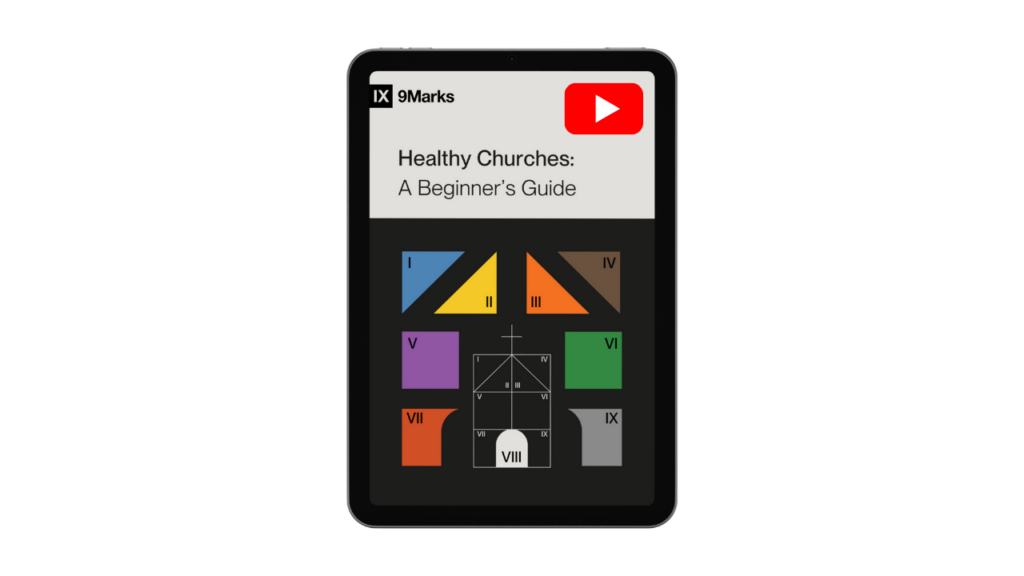
Healthy Churches: A Beginner’s Guide

Download eBook

Our Team

9Marks is led by Jonathan Leeman (president). He is joined by a dedicated staff. In addition to these, 9Marks resources are usually produced in partnership with faithful church leaders from around the world.

Full Time

Jonathan Leeman

President

Read bio

Jonathan serves as the President of 9Marks, where he oversees all aspects of the ministry. He is also the author of almost twenty books and teaches at several seminaries. He earned his M.Div. from Southern Seminary and a Ph.D. in theology from the University of Wales. He lives with his wife and daughters in a Maryland suburb of Washington, DC, and serves as an elder at Cheverly Baptist Church.
Rick Denham

International Director

Read bio

Rick serves as the International Director for 9Marks, where he oversees international publisher relations and book translations. He lives in São Paulo, Brazil with his wife, Reese, and together they have three children.

Alberto Jaquez

Media Director

Read bio

Alberto serves as the Media Director for 9Marks, where he oversees all podcasts, videos, and special media projects. He and his wife, Elisabeth, have one daughter, Luna Mae. He lives in Washington, D.C., and serves as an elder at Capitol Hill Baptist Church.

Pat Forrester

COO & Development Manager

Read bio

Pat serves as the Chief Operating Officer for 9Marks, where he oversees the day-to-day operations of the ministry. Additionally, Pat oversees 9Marks’s development efforts. Pat is married to Diana, and together they have two sons, two daughters-in-law, and four grandchildren. Pat and Diana live in Washington, D.C. and are members at Capitol Hill Baptist Church.

Taylor Hartley

Editorial Director

Read bio

Taylor serves as the Editorial Director for 9Marks, where he oversees the creation of articles, book reviews, journals, and 9Marks books. He received his M.Div. from Southern Seminary and is working on his Th.M. from London Seminary. Taylor and his wife, Rachel, live in Washington, D.C. with their son, Bode, and are members of Capitol Hill Baptist Church.

Tyler Ardiles

International Project Coordinator

Read bio

Tyler serves as the International Project Coordinator for 9Marks. In addition to his work with the international team, Tyler oversees 9Marks’s marketing campaigns. He moved to Washington, D.C. in 2024 and is a member of Capitol Hill Baptist Church.


Part Time

Mark Dever

President Emeritus

Read bio

Mark Dever serves as the senior pastor of Capitol Hill Baptist Church in Washington, DC. A Duke graduate, Dr. Dever holds a M.Div. from Gordon-Conwell Theological Seminary, a Th.M. from The Southern Baptist Theological Seminary, and a Ph.D. in Ecclesiastical History from Cambridge University. He is the president of 9Marks and has taught at a number of seminaries. Dr. Dever has also authored several books and articles. He and his wife Connie live and minister on Capitol Hill in Washington, D.C.

Alex Duke

Product Director

Read bio

Alex serves as the Product Director for 9Marks, where he creates journalistic podcasts, leads a new initiative called Ordinary, and edits books and journals. He lives in Louisville, Kentucky, with his wife, Melanie, and their three children. He serves as an elder of Third Avenue Baptist Church.

Jaime Arora

Financial Manager

Read bio

Jaime serves as the Financial Manager for 9Marks, where she manages the general budget and assists in human resources. She is married to Sam, and together they have two children. The Aroras live in Washington, D.C. and are members of Capitol Hill Baptist Church.

Amber Hammond

Executive Assistant

Read bio

Amber serves as the Executive Assistant for 9Marks, with special attention to Jonathan Leeman. She is married to Alex, and they live in Athens, Georgia, where they are members of Cleveland Road Baptist Church.

Judith Henderson

International Resource Manager

Read bio

Judith serves as the International Resource Manager for 9Marks, where she helps manage translation projects and assists with copy editing articles and journals. She lives in Shawinigan, Quebec with her husband, Daniel, and their two children.

Jeri Choi

Jeri Choi

Community Manager

Read bio

Jeri serves as the Community Manager for 9Marks, where she promotes our resources and events on social media and engages with our online community. Jeri also does much of 9Marks’s graphic design. She lives in Bethesda, MD, with her husband, James, and their three children. They are members of New Covenant Baptist Church, where James is the senior pastor.

David Daniels

Editorial Assistant

Read bio

David Daniels manages book reviews and edits various things with words for 9Marks. He is the husband of one wife named Jharmaine and father of three children named David Jr., Jonathan, and Daniella. David is an associate pastor of St. Paul’s Bible Church in Chicago and a graduate of the Charles Simeon Trust’s Chicago Course on Preaching.


Help us build healthy churches.

Give