

Handling Ungodly Criticism

July 13, 2026


July 13, 2026
Abstract: Matt Emadi offers pastors four suggestions for handling ungodly criticism from members in a way that honors Christ and builds up his church. Drawing from Scripture and pastoral experience, Emadi reminds us that pastors should desire the good of those who criticize them, know their people well, learn from criticism, and stay near the cross.
Editor’s Note: This article is taken from Church Matters, the 9Marks journal for pastors, in the issue titled “The Pastor and Suffering.”
“You speak with the voice of the Serpent.” “You preach the doctrine of demons.” Ouch. These are some of the criticisms I have received over the past twelve years of pastoral ministry. Of course, not all my critics have aligned me with Satanic forces of darkness. Much, if not most, of the criticism has been quite helpful for my growth and sanctification.
Anyone in a public office is going to face some level of criticism, and that includes pastors. Not everyone will agree with our decisions, our exegesis and applications, our actions, or our advice. And at times, our people will let us know why they think we’re wrong. Criticism is inevitable.
In a fallen world, ungodly criticism is also inevitable. Sometimes ungodly criticism will come our way from unregenerate people. I am convinced that the person who told me that I speak with the voice of the Serpent was one of those people. Such criticism from unbelievers is easier to handle. It can even be encouraging. Jesus himself said, “Woe to you, when all people speak well of you, for so their fathers did to the false prophets” (Luke 6:26). People who love darkness hate the light (John 3:19–20). Criticism leveled against us from the domain of darkness is often a reminder that we are doing something right.
In this short article, I’m not going to address the ungodly criticism that comes from unbelievers. Instead, my aim is to help us think carefully and biblically about how to handle the ungodly criticism that comes from godly people—that is, fellow saints indwelt by the Spirit and loved by Christ. Such people still sin against each other and, at times, against us.
We should not expect that our people will always package their criticism with encouraging affirmations, deferential language, and balanced nuance. Sometimes they will bite. Sometimes their words will be intended to hurt. Sometimes they will falsely judge our motives. We should be ready for this kind of ungodly criticism lest, on the one hand, we become arrogant, untouchable, angry, and uncorrectable; or, on the other hand, discouraged, defeated, and afraid to lead. We don’t want to find ourselves like Elijah retreating to a “juniper tree” to wallow in self-pity (1 Kgs. 19:4, KJV). We want to receive ungodly criticism with humility, patience, resilience, and wisdom. Toward that end, I have four suggestions.
Giving criticism is hard. Giving criticism in a mature, reasonable, dispassionate way is even harder. Let’s be honest, most of our members have not thought carefully about what it means to give and receive godly criticism before coming to us with a concern. People often bottle-up their frustrations internally, and when they finally talk about them, their passions get the best of them. Of course, I’m not excusing ungodly behavior. I’m simply making an observation that can help us be more compassionate and less defensive.
Even when we are the object of ungodly criticism, we must desire the spiritual good of the criticizer. As the apostle Paul wrote to the Christians in Rome, “We who are strong have an obligation to bear with the failings of the weak, and not to please ourselves. Let each of us please his neighbor for his good, to build him up” (Rom. 15:1–2). He says something similar to Christians in Galatia: “Brothers, if anyone is caught in any transgression, you who are spiritual should restore him in a spirit of gentleness” (Gal. 6:1). These two passages are not addressing the exact same issue, but they both highlight a relevant principle: the “strong” and the “spiritual” should proactively work for the good of the “weak” and those “caught” in sin. A posture of the heart that genuinely desires the good of others is necessary for handling ungodly criticism.
We must also remember that we are under obligation as undershepherds not to please ourselves but to build up God’s people, including the criticizer. In other words, we need humility. Paul exhorted the “spiritual” among the Galatians not to become proud when restoring a brother or sister caught in sin: “For if anyone thinks he is something, when he is nothing, he deceives himself” (Gal. 6:3). Frustration and resentment grow in the soil of pride. If our hearts are proud, we will seek our own good instead of the good of the criticizer when his or her ungodliness is evident. We should ask ourselves: Do we care more about winning an argument than shepherding this person? Do we care more about justifying ourselves than helping a brother or sister grow in spiritual maturity?
Ungodly criticism often comes from Christians who do not yet exemplify mature Christian virtues, at least not in this particular area. We do believe that sanctification is progressive, after all. Even our harshest critic is loved by the Good Shepherd and has been given the same righteousness that justifies us, which means we need the grace of God as much as they do. Remain humble, then, and remember that the critic is not a hindrance to your ministry—he or she is your ministry. Your job is to work for their good. You and I will need wisdom to know when to push back and when to listen, when to bear patiently and when to confront and correct. But the aim is the same: to build them up in their walk with Christ.
People have different personalities, struggles, weaknesses, hobbyhorses, influences, and interests. Before we let ungodly criticism cripple or calcify us, we should ask questions like: Does this person have a persnickety personality? Does he perceive himself to be the church’s theological watchdog with the spiritual gift of sniffing out heresy? Is she prone to emotional highs and lows? Does he come from an abusive home and have a history of unrighteous anger? Is she hypersensitive because the leaders of her previous church did her great spiritual harm? Is this person a new believer? Do they have a history of assuming motives?
Of course, recognizing the weaknesses or idiosyncrasies of others should not be an excuse to dismiss their criticism as illegitimate (more on this below), but it should help us respond to criticism with appropriate poise, maturity, and compassion. To be clear, we are not people pleasers, so we must not flatter or compromise the truth. However, knowing people well may help us discern whether someone simply needs to be heard or whether their criticism calls for a response. A wise and loving husband will not get drawn into a meaningless argument when he knows his wife has had a hard day. Likewise, a good pastor will not become overly affected by criticism if he knows the criticism is, in part, the fruit of other variables in that person’s life. Sometimes losing an argument is a win, and sometimes winning an argument is a loss.
Just because criticism is given in an ungodly manner or with an ungodly motive doesn’t mean there is no truth in it. Pastors must be open to correction. We need the help of God’s Spirit to cultivate humility so that we do not think more highly of ourselves than we ought (Rom. 12:3). Like all members, we have our own idiosyncrasies, weaknesses, and blind spots. God may use clunky, and even ungodly, criticism to edify us.
The book of Proverbs reminds us repeatedly that the wise man learns from reproof, but fools despise correction:
A wise pastor will not swiftly dismiss criticism because of the way it was packaged. Instead, he will give due consideration to the substance of the critique.
Brothers, let us not reject rubies because they are wrapped in toilet paper! Maybe God is using the exegetical watchdog in your church to keep you theologically precise. Maybe God is using the hypersensitive saint to help you grow in patience and gentleness. Maybe the church member wrongly impugned your motives, but did the critique reveal a weakness in your leadership? Next time you get criticized, even in an ungodly manner, ask yourself if the substance of the criticism is true or if there is something you need to learn from it. A plurality of elders is useful here, as faithful, mature brothers can help us discern if the criticism is justified or unfounded.
In his excellent article, “The Cross and Criticism,”11 .Alfred J. Poirier, “The Cross and Criticism,” The Gospel Coalition, July 28, 2019, https://www.thegospelcoalition.org/article/cross-criticism/. Alfred Poirier reminds us that the key to handling all types of criticism is “understanding, believing, and affirming all God says about us in the cross of Christ.” The cross simultaneously declares the heinousness of our sin and the reality of our forgiveness and justification in Christ. The cross has “criticized” us and “judged” us “more intensely, deeply, pervasively, and truly than anyone else ever could,” and yet the cross is also the rock-solid assurance of God’s love for us and the basis of our justification (Rom. 3:23–26). By understanding the meaning of the cross, we can rightly say with Poirier: “I do not fear man’s criticism, for I have already agreed with God’s criticism. And I do not look ultimately for man’s approval, for I have gained by grace God’s approval.”22 .Ibid.
Meditating regularly on the gospel will prepare us to handle ungodly criticism without sniveling or sneering, but instead with humility, patience, resilience, and wisdom. In fact, how we respond to ungodly criticism might prove to be one of our most profound opportunities to emulate the love of Christ. For “God shows his love for us in that while we were still sinners, Christ died for us” (Rom. 5:8). Christ reconciled us to God even while we were enemies (Rom. 5:10). We can work for the good of our criticizers because Jesus cared about the ultimate good of his crucifiers, and that includes you and me.
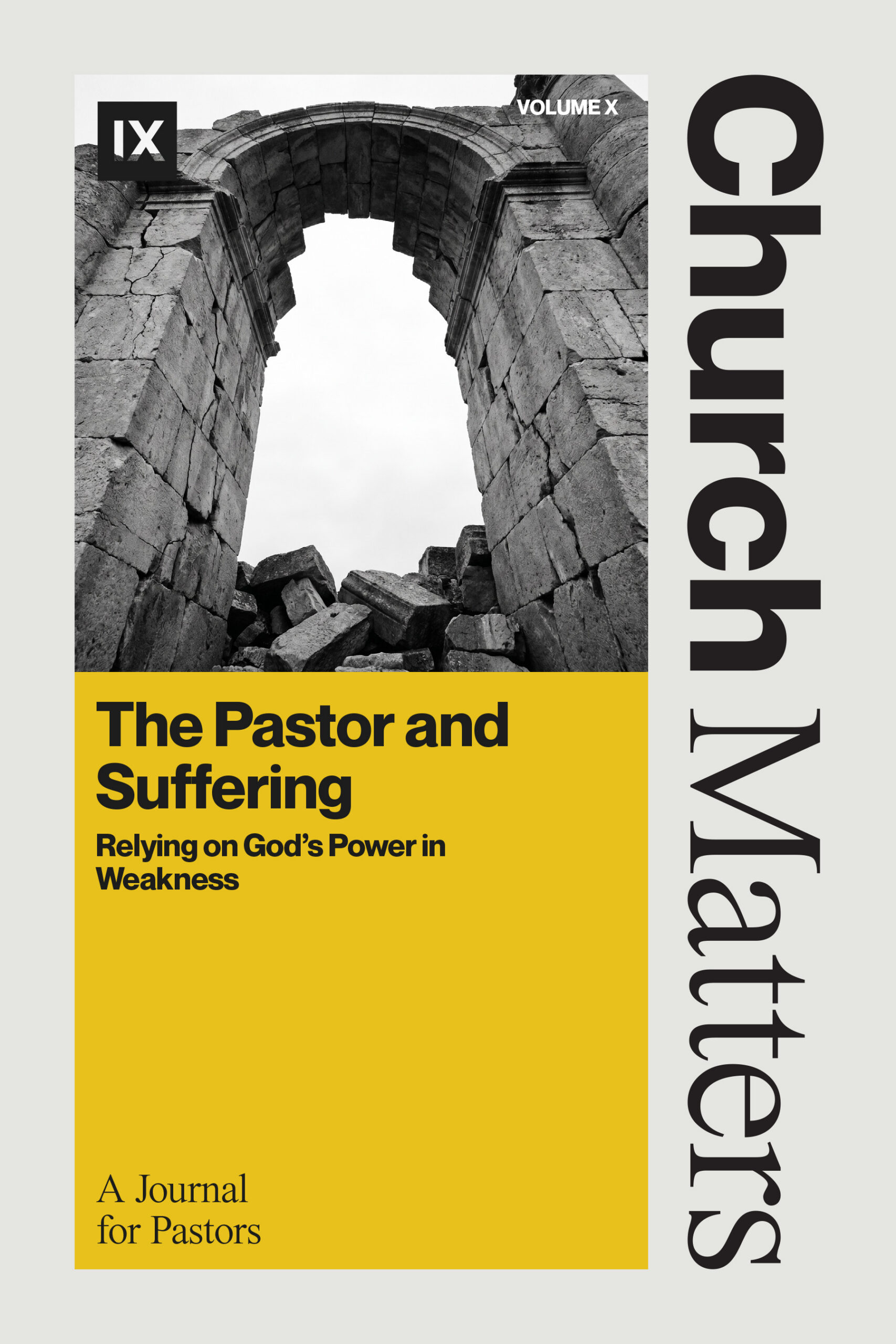
No pastor is immune from suffering. Whether it's cancer, depression, grief, or persecution, pastors face the same kinds of trials as their people. Not to mention the difficulties that arise from the ministry itself. But how can pastors strengthen God's people amid their own suffering?
Go to Journal →