

I Was Fired for My Preaching

June 29, 2026


June 29, 2026
Abstract: Jeremy Todd reflects on the painful experience of being fired for his preaching, even as he recounts the invaluable lessons the Lord taught him in the process. Pastors should find their identity in Christ, not in a ministry position. And they must not assume that the church understands or agrees with them on important biblical truths. Instead, they must consistently and patiently explain the truth, even as they continue to love the flock.
Editor’s Note: This article is taken from Church Matters, the 9Marks journal for pastors, in the issue titled “The Pastor and Suffering.”
I will never forget the phone call from the chairman of the search committee informing me that the church had overwhelmingly voted to call me as their next senior pastor. I was excited, and the church was too. The future seemed bright.
Three years later, I received another unforgettable call while on vacation: a significant number of families within the church were demanding my removal.
I am now twelve years removed from the ill-fated business meeting that followed, and I can still recall nearly every detail. The line indelibly engrained into my psyche came from an older gentleman sitting center right, eight rows back, who stood to his feet and exclaimed, “Pastor, I don’t care what that book says, that’s not how we do things here!”
“That book” he referenced was the Bible I held open in my hand. And his declaration, affirmed by many others in the room, instantaneously changed my life forever. The church was more concerned for their traditions than God’s Word preached and practiced. Upon that revelation, I knew my ministry within this church was done.
In the years since, my wounds have mostly healed, though scars remain. Emotional scars, much like physical scars, have a way of marking us for a lifetime. They become perpetual reminders not only of the pain experienced but also of lessons learned.
The days immediately following a termination or forced resignation are lonely. Feelings of failure, regret, and uncertainty are overwhelming. My pride was shattered, as were “my” plans for life and ministry. The Evil One tempted me to think of my situation as unique, yet sadly I continue to hear from many who share a similar story. Many of us are now brothers initiated into a fraternity we never requested to join.
Like anyone else, pastors can understand being terminated for justifiable reasons. However, when the sheep reject the shepherd for the truths he has taught, the pain goes deep. Initially I felt relief, like a giant weight had been lifted from my shoulders. The secret meetings, back-channel messages, and anonymous letters ceased. Yet, in my grief, I soon had to acknowledge that I lost more than a job; I lost the local church that the Lord had entrusted to my care. Regardless of who was at fault, this realization cut deeply. The body had been severed, leaving wounds that do not quickly heal.
It was difficult to resist the urge to immediately pursue a new pastorate. However, an immediate return to ministry would not have been fair to me, my family, or any future congregation. Instead, I set my pride aside, joined a healthy local church, and took a job outside of pastoral ministry. I decided it would be better to decline preaching opportunities and forego the interview process than to expose my wounds for all to see.
I wrestled with whether the reward was worth the cost, and I often wondered if I would ever return to pastoral ministry. As days turned into months, and months turned into years, I faced the growing possibility that a return to full-time pastoral ministry may not be the Lord’s plan for my life. This realization was devastating.
Yet, by God’s grace, the Spirit began to open my eyes to the reality that, for far too long, my identity was found in my professional title, not in my being a Christian. Through the sanctifying lessons of this season, Christ convicted me of my sin. I could not faithfully follow him—much less lead others—if my identity as a pastor hindered my ability to trust him as my only hope in life and death. Over time and through many tears, he brought me to the point where I could honestly say that if I never pastored another church or preached another sermon, Christ is enough.
Waiting was difficult, but it was not without purpose. This season provided me the opportunity to experience ministry from a different perspective. I had time to examine the various ways I could, and should, have served the church better. Culpability is rarely one-sided in a broken relationship, and there was much to learn from even my strongest critics. Each of these realizations not only made me a better pastor, but most importantly, a more faithful follower of Christ.
In the days leading up to the ill-fated business meeting, I was tempted to compromise my teaching to keep my position. For the first time in my life, I had to truly grapple with the question of whom I would fear more, God or man. It wasn’t merely a theoretical question, but one that required practical obedience. Would I compromise my teaching and keep my position, or would I stand firm and find myself unemployed?
As I was brought face-to-face with my fears, I not only developed thicker skin, but the Lord also grew in me an unwavering commitment to expositional preaching and deep discipleship.
In hindsight, I wish I had been a better expositor, as well as a more seasoned pastor. The church that forced me out needed both. What I did provide, and for this I have no regrets, was consistent and faithful preaching of the gospel. I strove to make the point of the passage the point of the sermon and to direct my listeners to the hope found in Christ. I was (and still am) committed to the belief that sound doctrine must drive the methodology, missiology, and doxology of the local church. Whether it is how we receive members, how we fence the Lord’s Table, or how we determine which songs to sing, our theology must drive our decision making—not tradition or personal preference. We must preach Christ crucified. We must declare the whole counsel of God. We must care deeply about what “that book” says, because that’s all we have to say.
This painful experience, along with my subsequent years in pastoral ministry, taught me never to assume every member of my church understands these foundational truths in the same way. A shared statement of faith, though extremely helpful, is not a guarantee that your entire congregation will always agree on doctrine, the ordinances, or church membership. Perhaps this assumption proved to be my biggest mistake.
The words we use may not be received or understood as we intend them to be. Therefore, when our members ask questions, we must patiently answer them and slow down if necessary. When doctrine appears to lead to division, hold fast to the truth, but also resist the urge to see congregants as your “adversaries.” God loves them in Jesus and so must you.
Pastors will continue to face unjust criticism, people will reject our teaching, and sometimes those closest to us will betray us. Regardless, we must look to Christ. Jesus, in his suffering, never dismissed his opposition; rather, his love for them compelled him to go to the cross. Oh, may this same love compel us to love those whom he has called us to lead!
James tells us that the testing of our faith “produces steadfastness” and that the full effect of steadfastness is that we might be “perfect and complete, lacking in nothing” (Jas. 1:3–4). While I am far from perfect, the lessons learned through my termination did produce in me steadfastness, a steadfastness that continues to have its effect as the Lord reminds me each day that in Christ I have all I need. By God’s grace, I am now able to look back upon this trial with joy. My scars not only serve to remind me of lessons learned, but of the faithfulness of God and the hope I have in Christ.
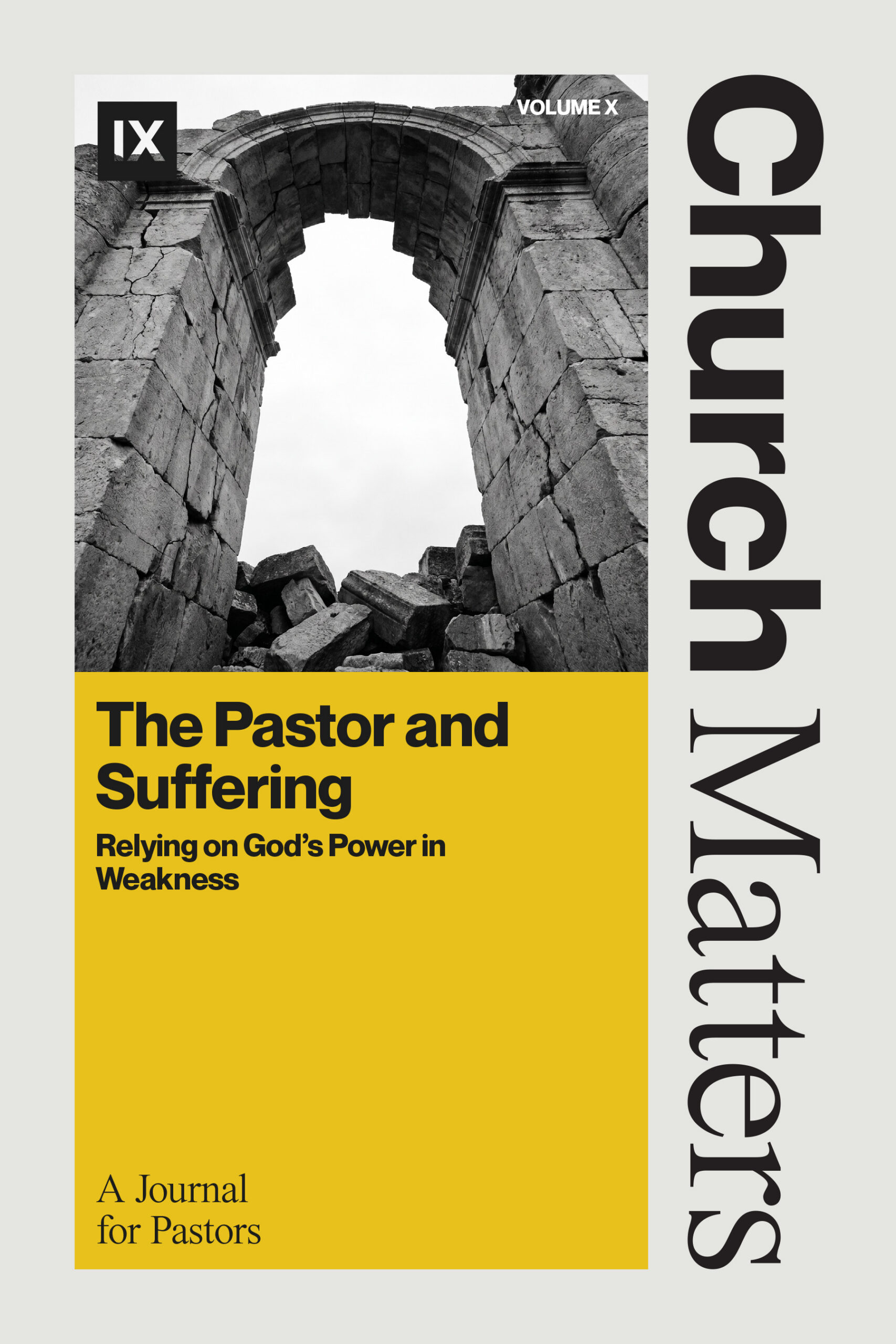
No pastor is immune from suffering. Whether it's cancer, depression, grief, or persecution, pastors face the same kinds of trials as their people. Not to mention the difficulties that arise from the ministry itself. But how can pastors strengthen God's people amid their own suffering?
Go to Journal →