

Why Baptism Must Precede Membership and the Table

October 27, 2025


October 27, 2025
On October 20, 2018, I married Kelsey Mathews. Our relationship had followed a typical pattern. We fell in love, got engaged, and planned a wedding with our friends and family in which we put on rings and she took my last name. After the wedding, we had a big party called a reception. Ours had a fountain of queso. You could say our relationships went from selection to identification to celebration.
The Lord establishes a similar pattern for his people. The ordered pattern goes like this: salvation (election), identification (baptism into membership), and then celebration (the Lord’s Supper). The pattern and order matter! The Lord has established for salvation to precede identification through baptism into membership and then for those identifying markers to precede the ongoing celebratory act of the Lord’s Supper.
So, yes, baptism comes before membership and the Lord’s Table. That statement may seem obvious to some and controversial to others. The Lord establishes this pattern throughout redemptive history.
As far back as Adam and Eve we see creation, identification, and then celebration: God creates man [creation] in his own image [identification] and then gives them all the food of the garden [celebration] (Gen. 1:27–29).
Later God selects Abraham, grants him the identifying marker of circumcision, and then asks him to prepare a celebratory meal (12:1–3; 17:9–11; 18:1–8).
Most significantly, God delivers his people through the death of the firstborn in Egypt and then provides a celebratory meal only to those who have been identified by circumcision (Exod. 12:43–51). Not only is the meal to be celebrated after the identifying marker, but the meal continues year after year as a reminder of God’s grace and salvation.
In the Old Covenant, God established a pattern—salvation, identification, celebration.
The New Testament links the Passover meal with the Lord’s Supper: celebrating the Passover, Jesus announced that he was the Passover Lamb and then established the pattern for the Lord’s Supper (Matt. 26). It also links circumcision with baptism: Paul writes, “In him also you were circumcised with a circumcision made without hands . . . having been buried with him in baptism, in which you were also raised with him through faith . . .” (Col. 2:11–12).
And as under the Old Covenant, so under the New: salvation precedes identification which precedes the celebratory meal. We declare our greater and more lasting deliverance through baptism into church membership, which is then reaffirmed by a regular meal that celebrates God’s past, present, and future grace. We celebrate “until he comes.”
Acts 2 details this pattern. Luke writes,
So those who received his word [salvation] were baptized, and there were added that day about three thousand souls [identification in membership]. And they devoted themselves to the apostles’ teaching and the fellowship, to the breaking of bread [celebration] and the prayers. (Acts 2:41–42)
This pattern occurs not only in Acts 2 at the formation of the church but also in the primary place we receive detailed instructions on the Lord’s Supper—Paul’s first letter to the Corinthians. Notice who Paul addresses in this letter: those who have been saved (1:2); those who have identified with Christ’s people in baptism (1:13–17; 12:13); and those who are members of the church (12:12–30). As in Acts 2, only baptized believers who have been added to the church are to partake of the Lord’s Table (11:17–34).
Furthermore, there are no examples in the New Testament of someone taking the Lord’s Supper before baptism.
The salvation-identification-celebration pattern has also been recognized in several major documents and confessions of church history. For starters, the second-century Didache places baptism before communion: “But let no one eat or drink of your Eucharist, but they who have been baptized into the name of the Lord” (Didache, Chapter 9).
Baptist statements of faith such as the First London Confession (1646), the New Hampshire Confession (1833), the Abstract of Principles (1858), and all the Baptist Faith and Messages (1925, 1963, 2000) explicitly establish the pattern of baptism before membership and the Table.
The First London Confession reads, “Baptism is an ordinance of the New Testament, given by Christ, to be dispensed upon persons professing faith, or that are made disciples; who upon profession of faith, ought to be baptized, and after to partake of the Lord’s Supper.”
The most recent Baptist Faith & Message (2000) also affirms that baptism “is prerequisite to the privileges of church membership and to the Lord’s Supper” (art. 7).
Beginning in the Old Covenant and extending into the New Covenant, the Lord has established an orderly pattern for his people to follow. Some modern-day practices confuse this pattern. But the testimony of the Scriptures and our confessions is clear.
Therefore, our teaching and our practice should recognize that these acts of salvation, identification, and celebration not only remind us of the past but point us to a future wedding day. One day, we will behold with unveiled faces what we have long anticipated. We will see how clearly Christ identifies and gives himself to us. John writes of this day, “Behold, the dwelling place of God is with man. He will dwell with them, and they will be his people, and God himself will be with them as their God” (Rev. 21:3, emphasis added). On that day, at the marriage supper of the Lamb, our salvation will be complete, our bondage to death will be merely a memory, and our identification with God will be total and apparent. We will be with him in his place, and we will sit down for the reception of all receptions as we feast forevermore in celebration of what he has done to make it so.
Polity is not the gospel, but it’s an outgrowth of the gospel, given by God to protect and promote the gospel, particularly over time.
Go to Journal →
If you can answer four questions affirmatively then I think you’re looking at a true baptism.
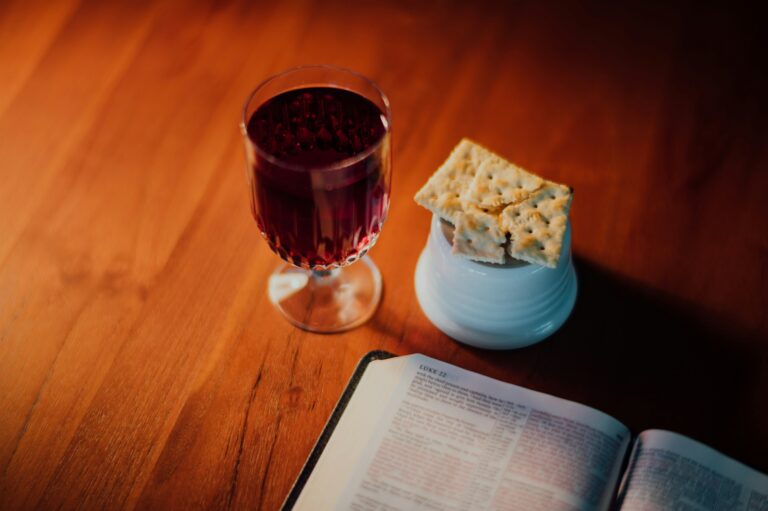
Just as your church (hopefully) does not allow just anyone to preach the Word, so also should your church think carefully about who administers the ordinances.

To help Christians follow a conscience bound by Scripture is not pedantic, but wise.

In Planting by Pastoring, author Nathan Knight challenges our view of church planting and centers the goal of pastoral ministry on a basic biblical foundation: a church plant is in fact a church, and a planter is in fact a pastor.

As churches rapidly expand, Christians risk viewing the church with an entrepreneurial mindset. Church planters can be tempted to fixate on gaining numbers and achieving financial stability as their only metrics for success. They fail to focus on lifting up Christ’s people within the church.

What is a deacon? What does a deacon do? In this second 9Marks Book Club, Jonathan Leeman and Matt Smethurst discuss the important topic of deacons in a local church. Buy the book here: https://9marks.myshopify.com/products…