

Pulling the Thread
July 22, 2026

July 22, 2026
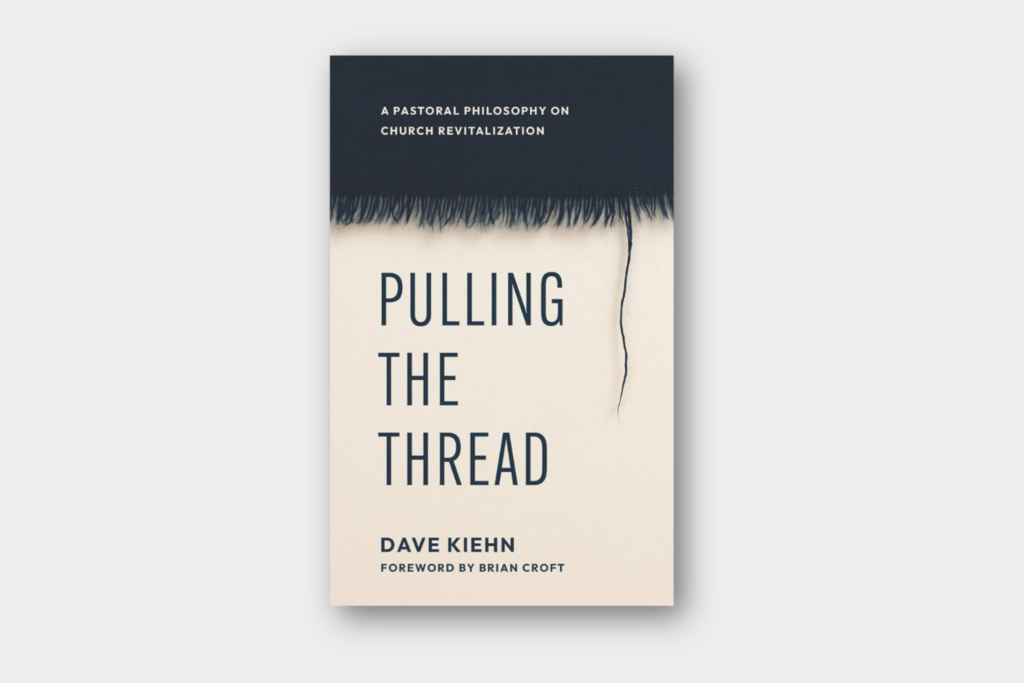
Abstract: Garrett Conner reviews Dave Kiehn’s book Pulling the Thread: A Pastoral Philosophy on Church Revitalization and highlights sevearl of the book’s strengths. Kiehn’s book prompts pastors to reflect on their own spiritual health and approach to ministry, and he encourages them to consider how their relationships within the church affect their ministry. Pastors will be emboldened to address difficult issues related to deacons, elders, and gospel partnerships.
Dave Kiehn, Pulling the Thread: A Pastoral Philosophy on Church Revitalization. Baptist Courier, 2025. 316 pages.
“How have you been lately?”
In conversation it becomes clear when someone is genuinely interested in you. They ask thoughtful questions and demonstrate authentic curiosity. On the other hand, we’ve all been part of a one-sided conversation where one person seems interested only in talking about themselves and their own interests. While reading Dave Kiehn’s Pulling the Thread, I felt like I was sitting down for a thoughtful conversation about church revitalization with a loving and faithful pastor who was genuinely interested in the work the Lord had given me to do.
Not since reading Don Carson’s Memoirs of an Ordinary Pastor11 .D.A. Carson, Memoirs of an Ordinary Pastor: The Life and Reflections of Tom Carson. Crossway, 2025. have I encountered a book on ministry that has encouraged me this much. While this book differs from Carson’s in many ways, the two books share a common thread: they address the wounds, losses, and heavy burdens of pastoral ministry. More specifically, Kiehn addresses challenges related to self-awareness, relational depth, and leadership struggles. He manages to lift readers out of the daily skirmishes of ministry to provide a wider and clearer view of the battlefield. In addition, Pulling the Thread is brimming with good diagnostic questions.
The first three chapters alone are worth the price of the book. They prompt pastors to reflect on past wounds, unhealthy habits, family dynamics, and sinful motives in ministry. In the process, these chapters promote growth in self-awareness by gently uncovering blind spots. And yet, rather than leaving pastors feeling condemned, Kiehn guides pastors toward biblically faithful solutions.
The book is uniquely about relationships and their role in pastoral leadership. These relationships begin with our communion with God, which then flows into our families and friendships, and from there into our wider ministry at the church. Pulling the Thread shows how the pastor’s presence with his people is needed for his connection and credibility with them.
As pastors, the way we approach relationships directly impacts how we preach and minister. People can sense our affection for them, and they can also sense when we view them simply as projects to complete. Kiehn summons us to model Christ’s gracious heart for sinners and to reflect on how our relational practices affect the congregation’s spiritual health. Pastors are to be marked by truth, love, patience, friendship, and presence. The role of relationships in revitalization is both convicting and inspiring.
Finally, the book helps the reader discern several thorny issues surrounding elders, deacons, and gospel partnerships. These sections encourage pastors not to micromanage but to empower those with whom they serve. They also help the pastor move from fearfulness to bold faith in the way he helps other churches. I found fresh encouragement to rethink how our church develops leaders, cares for the congregation, and collaborates with other churches.
In an age of internet fame, endless scrolling, and YouTube Shorts, we do not need more self-promoting pastors. We need godly, warm, and faithful shepherds. And this book helps pastors to be both convictional and cheerful.