

Resurrection Power Amidst Digital Death

August 12, 2026

August 12, 2026
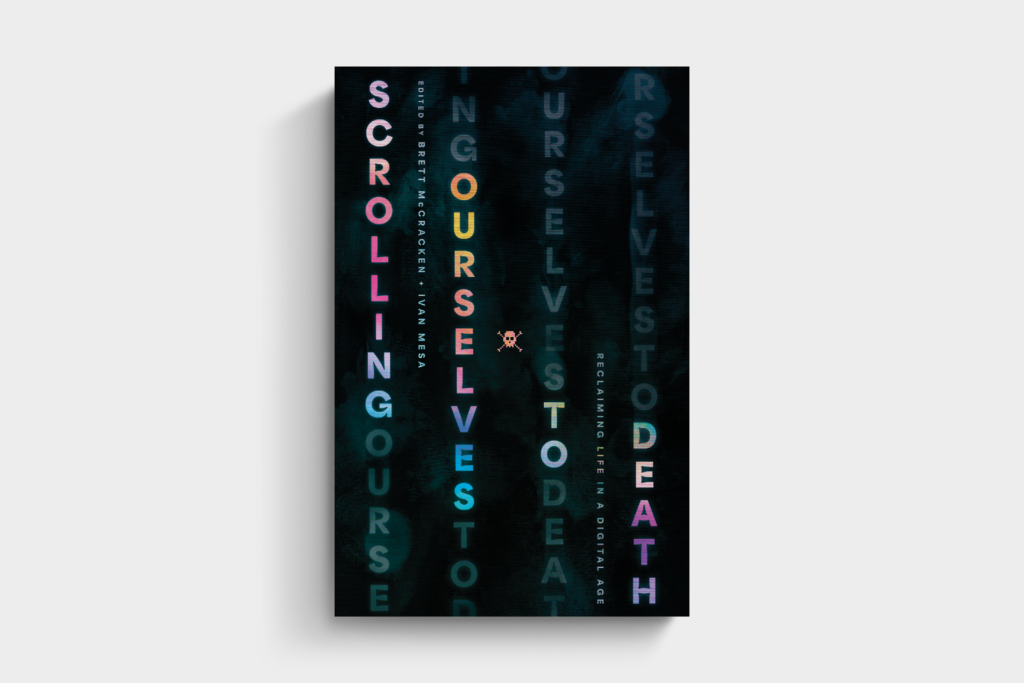
Abstract: Trevor Gilbert reviews Scrolling Ourselves to Death: Reclaim Life in a Digital Age, a resource from The Gospel Coalition and Crossway that includes a multitude of contributors. This book addresses the issue of digital media from a biblical worldview, highlighting various ways that this digital environment endangers and impoverishes Christian discipleship. Gratefully, God is able to sustain his people through these challenges, and he does this primarily through the truth of Scripture and in the context of the local church.
Scrolling Ourselves to Death: Reclaiming Life in a Digital Age, eds. McCracken, Brett and Ivan Mesa. Crossway, 2025. 256 pages.
“Sadly, many Christians default towards a naïve embrace of technology as a neutral and merely pragmatic tool to be harnessed for mission” (10). This observation runs throughout Scrolling Ourselves to Death: Reclaim Life in a Digital Age, a resource from The Gospel Coalition and Crossway that examines modern digital media in light of the gospel. If you want to prepare your church for life in an age of “information satiation” (8), this resource is a great place to deepen your understanding of the issues involved, as it represents the work of multiple contributors who address various aspects of this topic. Scrolling Ourselves repurposes the basic insights of Neil Postman’s 1985 classic Amusing Ourselves to Death and applies them to digital media, all within a biblical worldview.
Scrolling Ourselves makes the case that though our churches are full of people who may have resurrection life, these individuals are simultaneously—to greater and lesser extents—embracing digital death. “The best of us are responsible users who can consume media in moderation. But none of us is fully sober” (27).
Throughout these essays on digital media, three predicaments show up repeatedly: false digital discipleship, disembodied community, and the decay of contemplation.
A recurring argument in Scrolling Ourselves is that nearly everyone is having their hearts and minds formed by digital media. “Compared to twenty years ago, the internet—not the local church—has become the primary place where Christians are formed today” (94).
Some parts of this digital discipleship may be obvious. For instance, we’ve all been on the receiving end of “Let me tell you what I heard on this podcast.” But the issue goes beyond an increase in knowledge or even a massive number of hours wasted scrolling through instantly forgotten videos. The authors point out that the digital media we’re consuming is warping our expectations of the Christian life. Though the internet has provided access to a bounty of gospel-rich resources (like this article!), this book confronts us with the reality that “this accessibility comes with the risk of trivializing religious engagement, reducing it to just another form of digital content consumed passively and intermittently” (42).
The result is a morass of trivialization, deception, self-promotion, and an occasional sprinkling in of the truth. The fact that the members of our churches are gleefully and willfully swimming in this flood should jolt us awake. After all, making disciples is the church’s mission (Matt. 28:19–20), and it cannot be outsourced to social media.
Every hour spent scrolling is time we’re not pouring into the lives of other people. Thus, in addition to normalizing the idea of (so-called) “virtual church,” digital media has also chipped away at the day-to-day life of the church. Sitting with someone as they grieve and physically speaking the comfort of the gospel into their life is not the same as sending texts (as helpful as those can be).
Gratefully, Scrolling Ourselves does not suggest that the battle for embodied community is lost. Instead, we’re challenged to “think about how we can use such media as invitations to face-to-face encounters where people can ask questions (and have them answered) and witness Christian community” (113). These in-person encounters help the church present an alternative to a deeply dissatisfying, disembodied way of life. For example, the church’s weekly gathering involves actual water baptisms and bread-and-wine communion, and its members can actually make eye contact with one another.
If you’ve made it this far, congratulations—you’ve defied a key trend, namely, the trivialization of information by packaging it in ten-second video clips that can be skipped with the flick of a finger. This trend, the authors convincingly argue, is breaking our brains. We see this most clearly with decreased attention spans, but it also shows up in our growing inability to think clearly and rationally about complex topics. In a world where people “are conditioned to accept that whatever the algorithm feeds them is perfectly appropriate” (83), they are struggling to sit down and read a basic book about the Bible. Furthermore, when gospel truth is opposed, people are accustomed to shrugging and then scrolling to the next video.
When you combine these predicaments—false digital discipleship, disembodied community, and the decay of contemplation—the book’s assessment of the effects of digital media seems entirely justified: “Digital media has played its hand, and by almost all quantifiable measures its primary effect has been to perpetuate despair in the human soul” (188). That this despair is present in the life of believers is disheartening.
If you’re discouraged by these issues, be encouraged by God’s faithfulness. Scrolling Ourselves reminds us, “We’re not on the losing side of a pointless battle. Instead, we’re serving a King who’s calling us to ask once more how we can be faithful in our generation and offer his healing in a broken, digital dopamine-addicted world” (30).
Likewise, be comforted by the fact that God has always known about this era of digital media in which people would scroll themselves to death, and he offers the same solution: conform your life to Scripture in the context of the local church. Before discussing the role of the local church further, it’s worth highlighting one more insight from the book.
Surely all Christians would agree that the media we consume is not neutral in the eyes of God. We must judge the content based on Scripture. Yet, following the insights of Postman’s Amusing Ourselves to Death, the authors suggest taking things one step further. Instead of limiting our discernment to the content of our media, we should also evaluate the medium by which it arrives. Christians should ask, “How is this medium affecting the way I learn, think, and interact with the world?”
Finally, the role of the local church shines through in this book. One author shares about how he “found a healthier way to live” by rediscovering “the beauty and necessity of the local church” (173). Various benefits of the church are mentioned. For example, worshiping in a community counters social media isolation (57); holding up the holy glory of Christ counters the trivialization of truth (123); and the gospel’s call to real-world action is counter to the digital world where one is “overinformed but underactivated” (168). Another author states, “Joy in God’s kingdom comes by way of high commitment to the inconvenient mess of embodied communities awkwardly learning to share life together in all its pain and joy” (196).
While various authors in this book suggest teaching Christians about digital media, no silver bullet is offered. Rather, the reader comes away thinking that the church feels perfectly suited to meet the challenge.