

How Can Exodus 15 Help God’s People Sing Today?

March 6, 2026
March 6, 2026
Abstract: Salvador Blanco reviews Sean DeMars’s book Redemption Song: A Primer on Singing for the People of God, highlighting eleven insights from the book. Through an exposition of “The Song of Moses” in Exodus 15, DeMars seeks to help God’s people sing in a way that honors God and builds up the church.
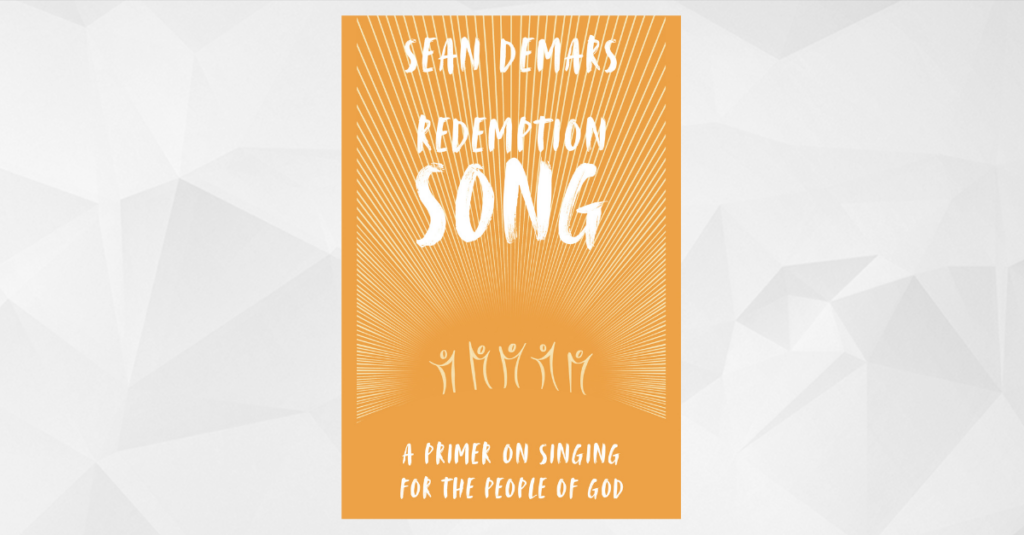
Sean DeMars, Redemption Song: A Primer on Singing for the People of God. Christian Focus, 2025. 96 pages.
How many books on congregational singing can you think of right now? Five max?
Sean DeMars’s Redemption Song fills a gap for pastors and song leaders by providing a brief exposition of Exodus 15, in which he finds “a description of and prescription for corporate worship that has much to say to the modern church” (11).
DeMars shares eleven insights that this Old Covenant song teaches Christ’s New Covenant people about corporate worship.
First, God’s people sing (17). It is not their duty, but their privilege. The benefits of singing include the engagement of the intellect, imagination, and memory (20).
Second, God’s people sing in response. A good pocket-sized definition of worship is “the right response to the grace of God” (27). Worship is not a work that merits grace.
Third, God’s people sing together. DeMars points out that the Psalms use plural pronouns 346 times (34). However, one ought not equate the personal language of the Psalms with merely private practices. Some Psalms, after all, are both corporate and personal, as are some of our favorite hymns (see “It Is Well with My Soul”) (52).
Fourth, God’s people sing to God, about God. DeMars pushes back against worship services that “spend a great deal of time singing praises to themselves instead of God” (39).
Fifth, God’s people sing the truth. It does not honor God to sing false things about him. DeMars cites the chorus to Cory Asbury’s famous song “Reckless Love”: “Oh, the overwhelming, never-ending, reckless love of God.” Why sing songs like this, DeMars asks, when there’s “an embarrassment of riches available to us when it comes to maximally God-glorifying music?” (44). Further, you don’t want your members teaching false things about God, much less singing them.
Sixth, God’s people sing the whole counsel of God. DeMars shows the breadth of emotions in the Psalms. Pastors and song leaders, how does your song bank compare? Do your songs reflect the emotional diversity of the songs we find in Scripture?
Seventh, God’s people sing history. “The Song of Moses teaches us that we must not forget the saints who came before us” (52). Sing songs that are five years old, five hundred years old, and five thousand years old (52).
Eighth, God’s people sing with a leader. Moses probably did not know music theory, nor is there evidence that he had a great voice, but he still led the people, and they followed joyfully. Likewise, Miriam led a song with a tambourine, and “all the women went out after her” (Exod. 15:20–21). Singing from the front is an opportunity to lead your people in their singing.
Ninth, God’s people sing to bear witness. DeMars describes the Song of Moses as a testimony set to music (61), and unlike some testimony songs today that are more generic in nature, Exodus 15 refers to an actual event in redemptive history.
Tenth, God’s people sing in wonder. This wonder comes from considering the magnitude of God’s redemption. Our singing often fails to reflect that magnitude, yet DeMars doesn’t shame readers. Instead, he instructs us to meditate on the gospel and “get back to singing to God with your whole heart” (66).
Lastly, God’s people sing with joy. DeMars helps us understand that we can sing with joy because we’ve been delivered like the Israelites. This chapter could be nuanced by a one-line concession that saints can be sorrowful yet always rejoicing (2 Cor. 6:10). At the same time, joy is rooted in the unchanging nature of the gospel.
The book has two appendices, one on the regulative principle and another on case studies exemplifying its flexibility. I appreciate that DeMars doesn’t enter into scholarly debates on the regulative principle but instead focuses on helping readers understand that God’s Word has something to say about the way we worship him. The Bible gives us rules about worship, not to take away from our worship experience but to “help facilitate strong, healthy, vibrant worship” (76).
The second appendix puts flesh on the bones of the regulative principle discussion. It speaks to many concerns pastors and song leaders have about the specifics of a service.
Redemption Song will help you reflect on and teach about Exodus 15 and its relationship to congregational singing. You’ll also get fresh considerations on the regulative principle. Finally, its brevity makes it more digestible than most books on congregational singing.
One unique aspect of this book is that it’s an exposition of an Old Testament text applied to corporate worship today, whereas some adherents to the regulative principle base their worship solely on explicit New Testament commands. Perhaps we should ask ourselves what other components of Old Testament worship could inform our corporate gatherings.