

How to Defuse Hostile Members Meetings

November 10, 2025


November 10, 2025
By God’s grace, my church hasn’t had many hostile members meetings. Our meetings are usually great times of fellowship, prayer, and laughter. They’ve unified our church in important and tangible ways. If you’re part of a healthy church, that’s probably true for you as well.
Unfortunately, many pastors know all too well, members meetings are not always joyful or unifying. Therefore, pastors may dread them, forecasting the hostility they are about to encounter from unhappy members.
Do you find yourself in that position? If so, don’t lose heart. You can’t change your church’s culture overnight, but through prayerful, patient leadership, your members meetings can become joyful occasions.
As far as it depends on us, we want to prevent members meetings from becoming hostile. Here are five practices that will get you on the path to healthier, less contentious meetings.
Hopefully this isn’t controversial advice, but members meetings are for . . . church members. And church members should be men and women who have made a credible profession of faith, agreed to uphold your church’s statement of faith and church covenant, and been received into membership by a vote of the other members. Allowing non-members to participate invites hostility and confusion because they don’t necessarily share your church’s theology or commitments.
As those responsible to teach, lead, and guard the flock, the elders of the church should usually set the agenda. But even if they don’t, someone (or some group of people) should decide ahead of time what will and will not be discussed. A wide-open forum often invites tension, allowing less mature members to introduce divisive issues or even appropriate issues in a divisive way.
If you’re like me, you probably have some good memories of playing sports at the park or on the driveway with friends. Chances are you also remember a good number of arguments (or even fights!) that broke out during play. Why did that happen? More often than not, fights occurred because there was no referee! No one had the authority to say definitively, “That’s a foul,” or “You stepped out of bounds.” A godly, gifted moderator is like a referee. He not only keeps the meeting moving, but calls fouls when members speak out of turn or out of line with Scripture.
If you’ve never taught your members about the purpose of these meetings, or the kind of conduct that is expected during them, I don’t blame you. On the surface, it feels unnecessary. Members meetings exist to handle the church’s business, and members should behave like Christians during them. Obviously, right?
But we might be assuming too much. In my experience, many church members have never participated in a members meeting, while some have had mostly negative experiences. There’s also the problem that the world normalizes and even rewards ungodly behavior during debate and disagreement. Our members have been shaped by what they’ve seen.
Therefore, pastors must teach that the purpose of members meetings is to pursue a unified approach (not necessarily a unanimous approach) to the business of the church. The apostle James is clear on how to pursue that unified approach: each of us (especially in members meetings!) should be “quick to hear, slow to speak, slow to anger, for the anger of man does not produce the righteousness of God” (1:19–20).
“Do as I say, not as I do” is not a good motto for pastoral ministry. We are “examples to the flock” (1 Pet. 5:3). We must demonstrate quickness to hear, even when members do not return the favor. We must fight the urge to interrupt, to talk on top of others, to raise our voices, or to formulate our responses while a brother or sister is speaking. When we start to feel defensive or angry, we need to pause and ask for the Spirit’s help. The members of our churches need to see their pastors doing what many politicians, talk show participants, and social media users seem unwilling or unable to do. We want to be able to say along with the apostle Paul, “Be imitators of me, as I am of Christ” (1 Cor. 11:1).
These five practices will go a long way toward having healthier, less contentious members meetings. But because church members (and pastors) are in the middle of their own sanctification process, even the healthiest churches sometimes have tense or contentious meetings.
What should we do when we find ourselves leading or participating in a heated meeting? Here are three ways to turn down the temperature.
Basketball is a game of runs. Your team can be up by a few points, but after a couple turnovers and a few missed shots, you can be down by ten. When this happens, a wise coach calls timeout to break the momentum, settle his team down, and address the mistakes. In the same way, church leaders should call timeout when things start heading in the wrong direction. This may look like pausing the conversation to gently remind everyone of the church covenant and the kind of conduct we have all committed to keeping. At my own church, we covenant to “ask God for grace to speak, think, and act toward one another in love at all times.” In a tense moment, reminding members of the promises we’ve made to one another, followed by a prayer for God’s help, can turn down the temperature of the room.
A few years ago, I brought a proposal to the church body that our elders had worked on for months. During the members meeting, several brothers and sisters suggested ways to improve our proposal. I can’t speak for the church, but I felt my own temperature rising, so I called timeout and huddled up with the elders while another leader made his presentation. During our huddle, the elders calmed me down and saw a wise path forward—a path that incorporated the members’ feedback. I presented the elders’ solution to the church body, and they approved it with a unanimous vote. My elders cooled me down and defused what could have become an unnecessarily tense situation.
Of all the issues that can raise the temperature of a members meeting, handling cases of church discipline is near the top. Church discipline involves real people who may be friends, spouses, or children of members in the room. There was a time in our church when the elders recommended removing from membership a particular member who had not attended or responded to the elders’ requests to meet up for nearly a year. We didn’t expect much pushback, but several members were uncomfortable with the proposal, stating that they hadn’t done enough to pursue this wayward member. So the elders called timeout, huddled up, and decided to withdraw our recommendation, giving the church more time to reach out. Had we forced the issue, we would have invited debilitating division. By punting the ball, however, we defused the situation. Two months later, the individual in question had still not repented, so the church removed her from membership with a unanimous vote.
Your church’s members meetings may not be joyful or unifying. But if you’re willing to play the long game, they can become gatherings you eagerly anticipate. With God’s help, do what you can to prevent members meetings from becoming hostile in the first place, and when things get heated, do what you can to turn down the temperature.
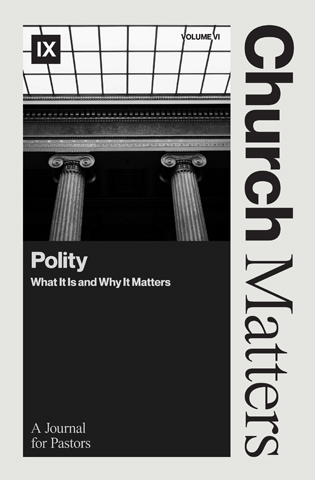
Polity is not the gospel, but it’s an outgrowth of the gospel, given by God to protect and promote the gospel, particularly over time.
Go to Journal →
Discussing difficult issues at members meetings is an opportunity to train the church.

Despite any poor past or present experiences, members meetings can and should offer opportunities for the family of God to build itself up in unity and love.

When church members vote on new members, they’re deciding on those with whom they’ll share the highest authority in the church.

What is a deacon? What does a deacon do? In this second 9Marks Book Club, Jonathan Leeman and Matt Smethurst discuss the important topic of deacons in a local church. Buy the book here: https://9marks.myshopify.com/products…

Mark Dever, Jonathan Leeman, and friends discuss Revival vs. Revivalism, a conversation about two different ways of doing ministry today.

Matt Rhodes explains that modern missionaries’ emphasis on minimal training and quick conversions can result in slipshod evangelism that harms the communities they intend to help.
