

Is Elder Plurality Necessary?

February 13, 2026


February 13, 2026
Abstract: Phil Newton reviews Dave Harvey’s book The Plurality Principle: How to Build and Maintain a Thriving Church Leadership Team. Harvey encourages churches to follow this biblical model of leadership, providing various reasons why elder plurality benefits churches, elder teams, and individual pastors. He addresses the role of senior pastor, the benefits of having staff elders, and the proper ways an elder plurality should operate. Newton’s review concludes that Harvey’s case for elder plurality is persuasive and insightful.
Dave Harvey, The Plurality Principle: How to Build and Maintain a Thriving Church Leadership Team. Wheaton, IL: Crossway, 2021. 192 pp.
Over the past thirty years, plural elder leadership has become more popular nationally and internationally. This shift has strengthened local church shepherding. However, not all agree with this movement. In the early 90s, when my church adopted plural elder leadership, one local pastor spoke against it in his church newsletter. Without identifying us, he stated that churches with elders were not Baptist. He offered no biblical or historical argument, just anecdotes.
Here’s the reality: moving to elder plurality can result in opposition, even though plurality leads to healthier congregational care.
Numerous texts convinced me that neglecting this New Testament leadership structure shortchanged my congregation of shepherding, care, and guidance they needed and weakened my own pastoral effectiveness (Acts 11:30, 14:23, 15:2ff., 20:17–30; Eph. 4:11–12; Phil. 1:1; 1 Thes. 5:12; 1 Tim. 3:1–7, 5:17–20; Titus 1:5–9; Heb. 13:7, 17; Jas. 5:13–16; 1 Pet. 5:1–4).
Yet consider three categories of objections:
Instead, plurality strengthens congregational authority. Everyone benefits from elders exercising a greater variety of gifts, with the senior pastor having increased liberty to play to his strengths.
Harvey looks at plurality from various angles to encourage churches to follow this biblical principle while enabling leaders to understand the unique role they share in God’s economy. He also asserts that too many churches have plurality in name but not in practice. It’s played out by talk without a walk, by overstepping the best use of the elders’ gifts, by gifted leaders swallowing up plurality, and by the creation of a top-down church government. He insightfully comments, “The more gifted the individual, the more essential the plurality” (78). Plurality, when rightly exercised, curbs the innate tendencies to control, to make ministry about self, and to use the church instead of serving it.
Does plurality eliminate a senior pastor role? Championing the senior pastor, Harvey qualifies him as the primus inter pares or “first among equals.” He explains the right emphasis is not on first or equals but among. As he notes, “The senior leader becomes a steward of the group’s authority and responsibility and accountability” (47, italics original). The senior pastor’s gifts naturally position him to see how to expand the church’s ministry, to use leadership gifts on behalf of the elders, and to maintain better care for the elder team. Harvey affirms that people generally follow gifted leaders. Yet a gifted leader needs a commitment to plurality to avoid dependence on his personality. He distinguishes senior pastors with five responsibilities: custodian of plurality, catalyst for progress, curator of culture, captain of communication, and liaison for partnerships (57–66).
Harvey espouses a solid rationale for non-staff elders in the plurality. Lay elders, while maybe lacking formal theological training or pastoral tenure, add needed diversity to a leadership team. As shepherds, they expand pastoral oversight and supply wisdom to work through pastoral issues. In the case of staff-elder turnover, they provide stability. They also offer broader perspectives to help staff pastors who may be trapped in ministerial tunnel vision. Harvey wisely adds, “When power is shared, it’s not lost; it’s multiplied” (112–118).
For elders to play a significant role in the church’s health, they must focus on healthy practices within the elder team. Harvey identifies four pillars that any elder team can use in working together to build healthy plurality.
Harvey’s foundational premise asserts, “The quality of your elder plurality determines the health of your church” (15). Perhaps determines overstates the elders’ position and power. Influences, shapes, hones, and intensifies might be more apt. Ultimately, Christ determines the church’s health by the rich provisions of his redemptive work (Heb. 10:1–25). Yet Jesus has, indeed, appointed elders to shepherd the church toward spiritual health.
Harvey succeeds in writing an effective resource for elder boards, elder candidates, and congregations seeking to transition to elder plurality. I gladly recommend his book.

Character is not a secondary, nice-to-have feature for an elder; it is essential to the role.

Elders need to fine-tune the exercise of their authority by adjusting the dials of confidence and humility depending on the issue.

If a church doesn’t have any elders, then it doesn’t have any overseers.

What is a deacon? What does a deacon do? In this second 9Marks Book Club, Jonathan Leeman and Matt Smethurst discuss the important topic of deacons in a local church. Buy the book here: https://9marks.myshopify.com/products…
In this video, Matt Smethurst explains how there must be a clear distinction between the offices of elder and deacon.
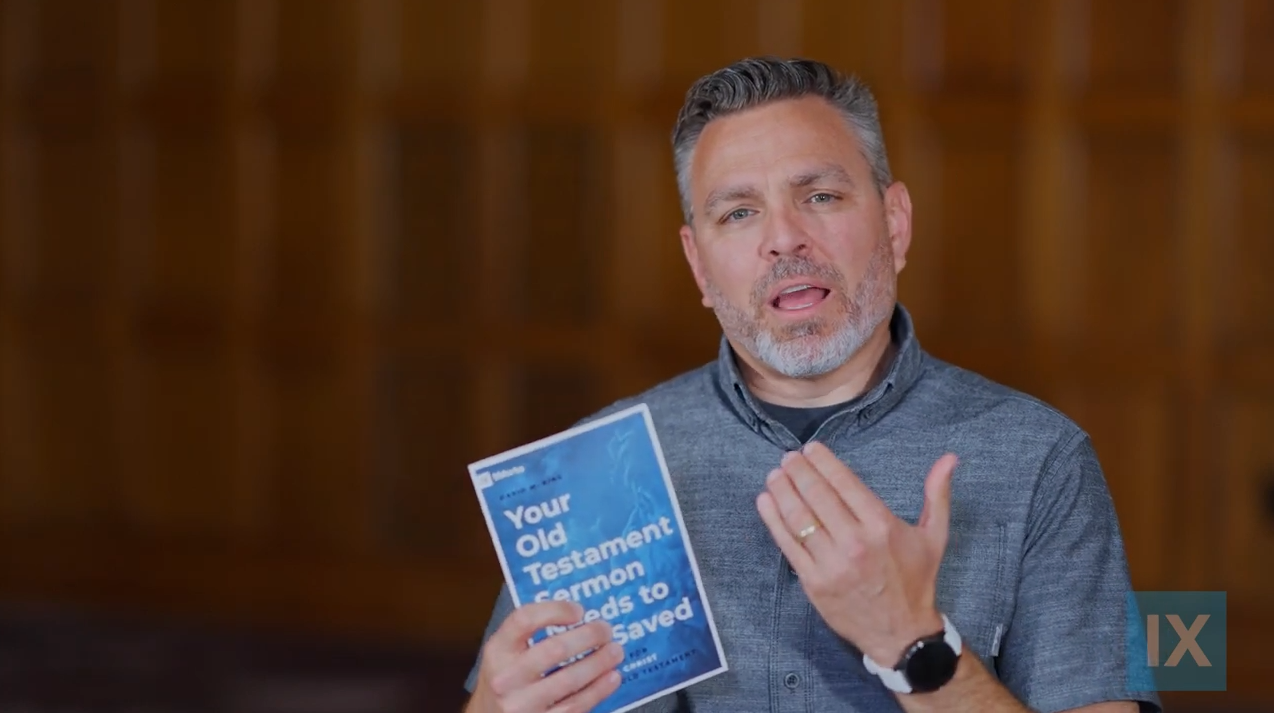
Every preacher has been there. You’ve been studying for hours, but you’re stuck in an Old Testament text. You can’t figure out how to get to Christ. What do you do?